






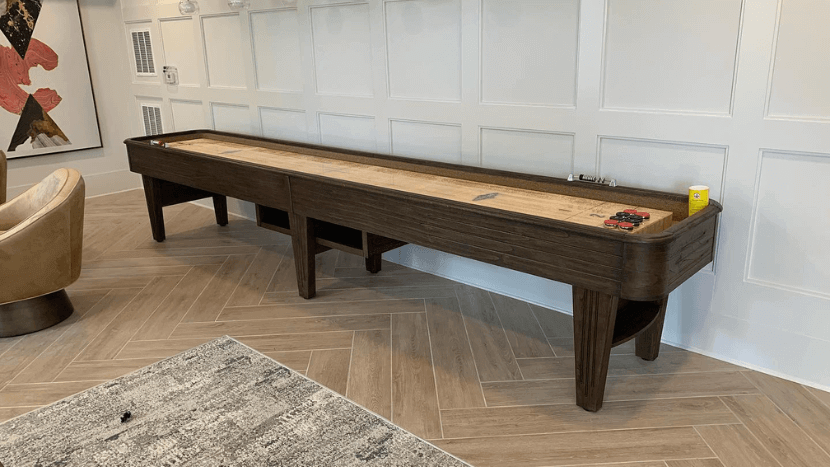
A shuffleboard table is a long, smooth game table where players slide weighted pucks toward a scoring zone at the far end. Choosing the right one depends on table size, playing surface material, and a style that fits your space.
If you’re considering jazzing up your game room, you might be Googling “pool tables on sale.” And that would be a fantastic option for a game room, but have you ever considered a shuffleboard table?
Shuffleboard tables are a classic addition to game rooms and entertainment spaces, with options to suit a range of layouts and design preferences.
In this article, we’ll cover shuffleboard’s history, why it’s growing in popularity, how it compares to a pool table, and what to look for when choosing one for your home.
What Is the History of Shuffleboard?
Shuffleboard is a centuries-old game that started in British taverns in the 1500s, where players slid pennies down bars to score points. The goal of this game was to get a penny as near the end of the bar as possible without it falling off. It wasn’t simply something people did in bars; the nobility enjoyed it, too. They ordered custom tables for their manors and had special coins made to serve as pucks.
Eventually, English migrants took shuffleboard to the United States, quickly becoming a staple at watering holes up and down the East Coast. In the early 1900s, the game arrived in California, and by the 1950s, it was a national phenomenon. Leagues sprung up throughout the country, and major newspapers started including the sport in their sports sections.
Soldiers from around the nation who had become fond of the game while serving their country in World War II brought it home, contributing significantly to its meteoric rise in popularity. An American national league originated in the 1970s, and the leisure sport continues to be popular today.
Why Is Shuffleboard Growing in Popularity?
Shuffleboard appeals to a wide range of players because it is easy to learn, social, and enjoyable for all ages and skill levels. It’s synonymous with cruise ships, but it’s also becoming a hit at bars and pubs alongside games like cornhole or bean bag toss. The game is most popular among seniors but is increasing among Millennials and Gen-Z
The oldest shuffleboard organization in the U.S., the St. Petersburg Shuffleboard Club, began hosting free shuffleboard nights on Friday nights, reigniting a love of the game in that neighborhood.
The main benefits of playing shuffleboard include:
- It’s Collaborative: Shuffleboard is more sociable than bowling, as players take turns and battle the pins. Teammates strategize, and opponents smack-talk. It’s a great way to bond and strengthen friendships as well.
- It’s Easy to Learn: Shuffleboard requires little athleticism. After a few games, you should be able to remember all the rules.
- You’ll Get a Workout: Shuffleboard gets you up and moving without weightlifting or severe cardio. According to My Fitness Pal, Shuffleboard burns 204 calories per hour for a 150-pound adult.
- It May Also Train Your Brain: Shuffleboard is more than simply throwing a puck down the court. In between turns, you should calculate which direction to throw your puck, check how many points you need to win, and mentally sum up the score.
You’ll also examine which pucks are in your way if you can tactically push another player’s disc out of a high-scoring zone.
How Do I Decide Between a Pool Table or a Shuffleboard Table?
The biggest factor is space. A shuffleboard table generally takes up less room than a pool table, making it a practical choice for tighter game rooms or multipurpose areas. If you’re having trouble deciding between a shuffleboard table or a modern pool table, here are a few questions to help you decide.
How Much Space Do You Have?
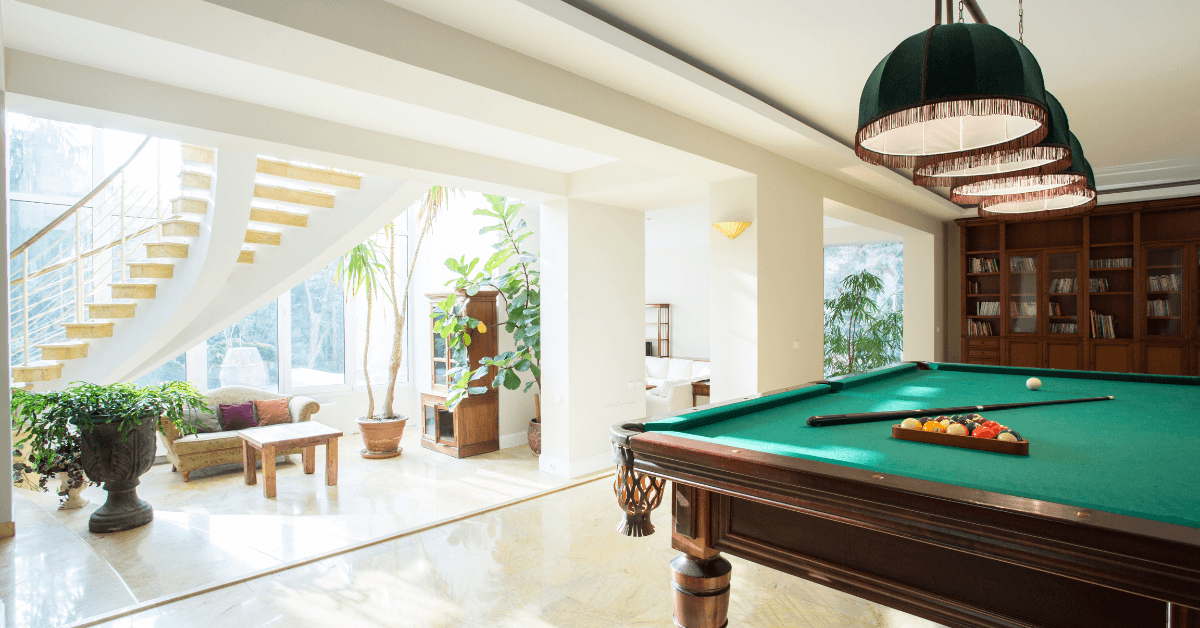
A pool table will take up even a spacious room since you must give it at least 5 feet of clearance on all sides. We suggest a minimum size of 7 feet (or a playing surface of 78″ by 39″) for a home slate pool table. The minimum recommended space for a pool table and its accessories is 16 1/2 feet by 13 feet. This sometimes necessitates moving to the basement and taking up an entire room.
If you’re limited on square footage, consider table shuffleboard. Good tables may be as little as 9 feet in length and 25 inches in width. Unlike a pool table, a table shuffleboard may be placed against a wall, in a corridor, or on the back side of a sectional sofa without taking up too much space. A couple of feet on each end is all you need for the game table.
When space is limited, shuffleboard is often the more practical option.
What Materials Are Shuffleboard Tables Made Of?
Shuffleboard tables are typically made from hardwoods like maple, beech, or walnut, along with polymer resin or laminate playing surfaces. Each material offers different benefits in durability, maintenance, and appearance.
The Brunswick Andover II shuffleboard table comes in a North American Maple Wood playing field in four different finishes and a polymer resin surface. The custom-manufactured California House Atherton Shuffleboard Table is unique in quality and craftsmanship, featuring a beech playing surface with inlaid black walnut markings.
Here is a quick comparison of common shuffleboard table materials:
| Material | Durability | Maintenance | Best For |
|---|---|---|---|
| Hardwood (Maple, Beech) | High | Moderate (needs waxing) | Serious players, classic look |
| Polymer Resin | Very High | Low | High-traffic game rooms |
| Laminate | Moderate | Low | Budget-friendly setups |
When comparing shuffleboard table brands, look for quality construction and durable finishes that support smooth, reliable play.
What Features Should I Look for in a Shuffleboard Table?
Shuffleboard tables can range from simple designs to more complex ones with electronic scoring, adjustable legs, and other extras. Knowing what to prioritize helps you get the most value.
The charming mid-century modern Austin Shuffleboard Table by California House has simple lines with those distinctive mid-century modern table legs for those who want a classic look to their shuffleboard table. The Legacy Billiards Classic Shuffleboard Table has climate adjusters to ensure a level and accurate game.
What Styles of Shuffleboard Tables Are Available?
Shuffleboard tables come in both traditional and modern designs, so the best choice depends on your personal taste and the overall aesthetic of your space.
If you want a bold design that evokes the arcades of your youth, check out the Champion Bank Shot Shuffleboard. Check out the California House Contemporary Origami Shuffleboard Table if you’re looking for elegant designs to elevate your entertaining space. Whatever your taste, Greater Southern has a shuffleboard table you will love!
How to Choose the Best Shuffleboard Table for Your Home
Choosing the best shuffleboard table comes down to measuring your space, picking the right material, and matching the style to your room. Here are the steps to follow:
- Measure your available space and allow enough clearance on each end for comfortable play.
- Decide on a table length. Common options range from 9 feet to 22 feet.
- Choose a playing surface material based on your budget and how often you’ll play.
- Pick a style that complements your game room, living area, or patio.
- Prioritize quality construction and practical extras that add long-term value.
Use this shuffleboard table buying guide as your checklist, and you’ll find the right table with confidence.
Conclusion
Overall, shuffleboard tables are a fun and engaging way to entertain guests and spend time with friends and family. With so many materials, features, and styles to choose from, there is a shuffleboard table out there for everyone. Try checking out Greater Southern Game Room & Patio if you want long-lasting, quality shuffleboards.
Frequently Asked Questions About Shuffleboard Tables
What size shuffleboard table should I buy?
For most home game rooms, a 9-foot to 12-foot table is ideal. Leave at least 2 feet of clearance at each end for comfortable play.
Can shuffleboard tables be used outdoors?
Most shuffleboard tables are designed for indoor use, but outdoor models with weather-resistant frames and polymer surfaces are available. Always choose a table specifically rated for outdoor conditions to prevent warping and damage.
How much does a shuffleboard table cost?
Entry-level shuffleboard tables start around $500, while high-end custom models can exceed $5,000. Price depends on size, material, craftsmanship, and extra features.
How do I maintain and care for a shuffleboard table?
Regularly apply shuffleboard wax to the playing surface and clean it with a soft cloth—avoid harsh chemicals. Check leveling adjusters seasonally to keep the playing field flat and true.
What is the difference between a shuffleboard table and a shuffleboard court?
A shuffleboard table is a raised indoor surface where players slide pucks by hand, while a shuffleboard court is a flat outdoor area where players push discs with a long cue stick. Both aim to land pucks in scoring zones, but they use different equipment and playing styles.